Cool Things to Draw on Isometric Paper
Isometric drawing: A designer's guide
Isometric drawing is a form of 3D drawing, which is set out using thirty-caste angles. It is a type of axonometric drawing so the same scale is used for every axis, resulting in a non-distorted image. Since isometric grids are pretty easy to set up up, once you sympathise the basics of isometric cartoon, creating a freehand isometric sketch is relatively simple.
This postal service explains all you lot demand to know near isometric cartoon. Y'all'll learn exactly what defines an isometric drawing, how it differs from one-point perspective, what to exercise to go started creating your own isometric project, and fifty-fifty more.
Elevate your fine art skills further by following the tutorials in our how to draw guide (which volition teach you how to draw pretty much anything), and you can besides use this roundup of the fine art techniques you should know about.
What is isometric drawing?
An isometric cartoon is a 3D representation of an object, room, building or design on a 2d surface. One of the defining characteristics of an isometric cartoon, compared to other types of 3D representation, is that the final prototype is not distorted. This is due to the fact that the foreshortening of the axes is equal. The word isometric comes from Greek to mean 'equal mensurate'.
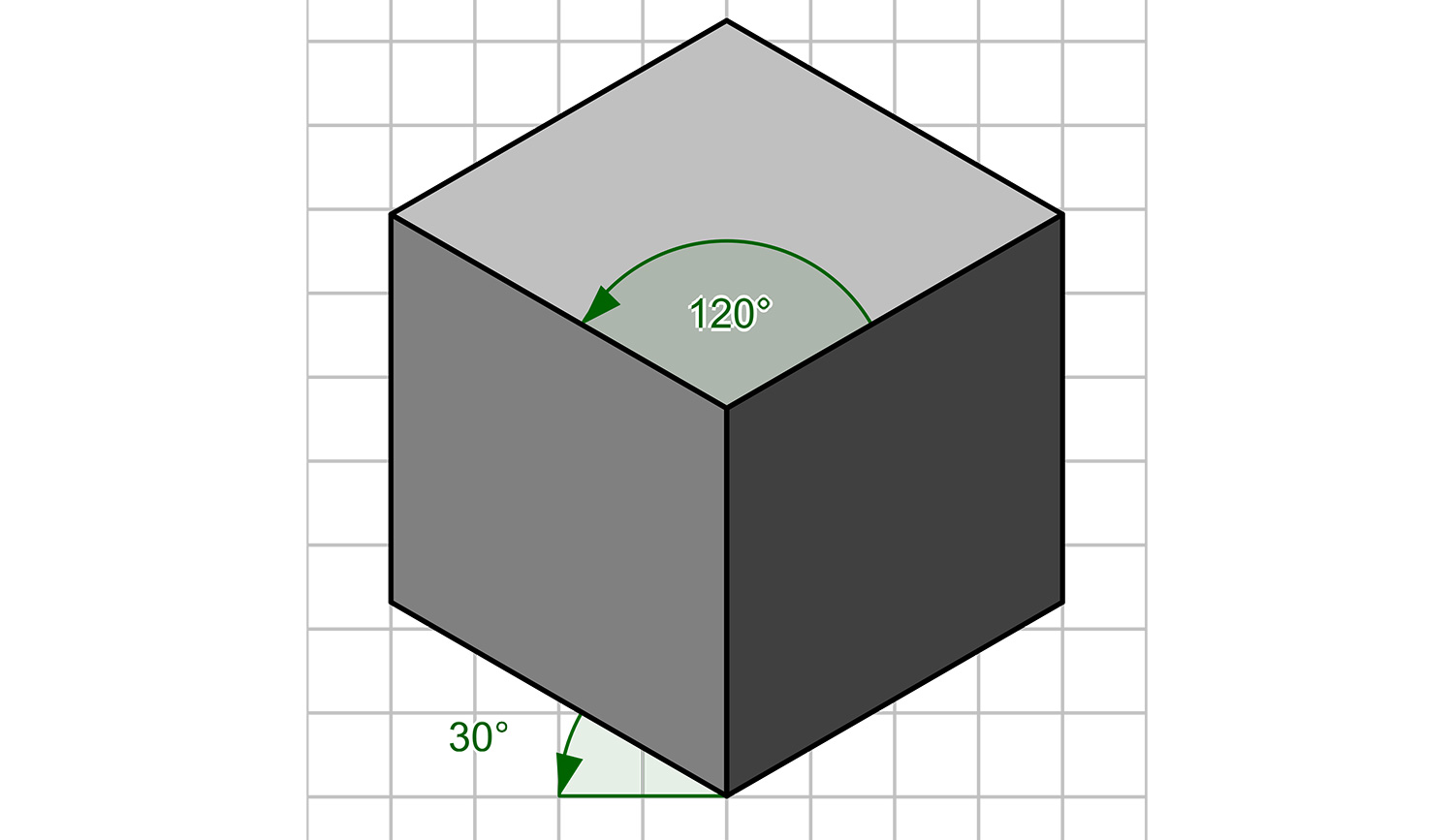
Isometric drawings differ from other types of axonometric cartoon, including dimetric and trimetric projections, in which different scales are used for different axes to give a distorted final prototype.
In an isometric drawing, the object appears every bit if it is being viewed from above from one corner, with the axes existence set out from this corner point. Isometric drawings begin with one vertical line along which ii points are divers. Any lines set out from these points should be synthetic at an bending of 30 degrees.
Isometric drawing vs i-bespeak perspective
Both isometric drawings and 1-signal perspective drawings utilize geometry and mathematics to present 3D representations on 2nd surfaces. Ane-point perspective drawings mimic what the man eye perceives, so objects appear smaller the further away they are from the viewer. In contrast, isometric drawings use parallel projection, which ways objects remain at the same size, no thing how far away they are.
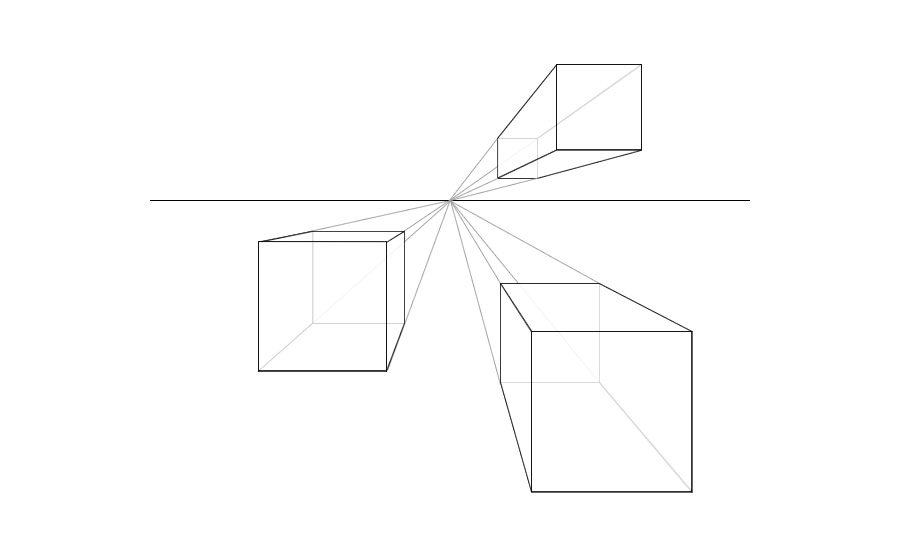
Basically, isometric drawing doesn't use perspective in its rendering (i.e. lines don't converge as they move away from the viewer). Isometric drawings are more than useful for functional drawings that are used to explicate how something works, while i-point perspective drawings are typically used to give a more sensory idea of an object or space.
How to draw an isometric cube
Drawing a cube using isometric project is very easy. Yous will demand a piece of paper, ruler, pencil and protractor (or for the shortcut version, using gridded paper, jump to the next section).
Using the ruler, draw a vertical line on the page, and mark three as spaced points along it. Draw a horizontal line through the everyman point, and using the protractor, marking out a xxx degree angle up from the line on either side. Draw a line back through the lowest point from the 30 degree angle on each side.
Repeat this pace through the heart signal and the same through the acme signal, but with the tiptop point, mark out the angle down. The lines from the second and third point will cantankerous at a certain point, and from this intersection, draw a vertical line downward towards the angled lines coming from the bottom point. You should be able to see the form of the cube where all of the lines intersect.
Using an isometric grid
For all the cheats out there who don't have the necessary tools (or inclination) to create an isometric project, in that location is a foolproof fashion to bash out your axonometric drawing: simply employ an isometric grid. The pattern can exist downloaded online, and volition salvage you lots of time and try.
Alternatively, larn how to fix upward your own grid in Illustrator by post-obit the video tutorial below.
In one case your eyes get accustomed to the trickery of the triangular design, you will immediately detect how the isometric works. The super handy thing about the grid is that it already has all of the 30 caste angles prepare for y'all. This tutorial (opens in new tab) walks you through how to depict a cube using an isometric grid.
The benefits of isometric drawing
Isometric drawings are very useful for designers – peculiarly architects, industrial and interior designers and engineers, as they are platonic for visualising rooms, products, and infrastructure. They're a cracking way to rapidly test out different design ideas.
At that place are a number of other situations in which isometric projection is useful. In wayfinding systems, for instance in museums or galleries, an isometric wall maps can show visitors where they are in the building, what is going on elsewhere, and how to go to get around.
Some of the all-time infographics use isometric projection to enable them to show more information than would be possible in a 2d drawing. Some of the best logos besides apply this approach to create impact.
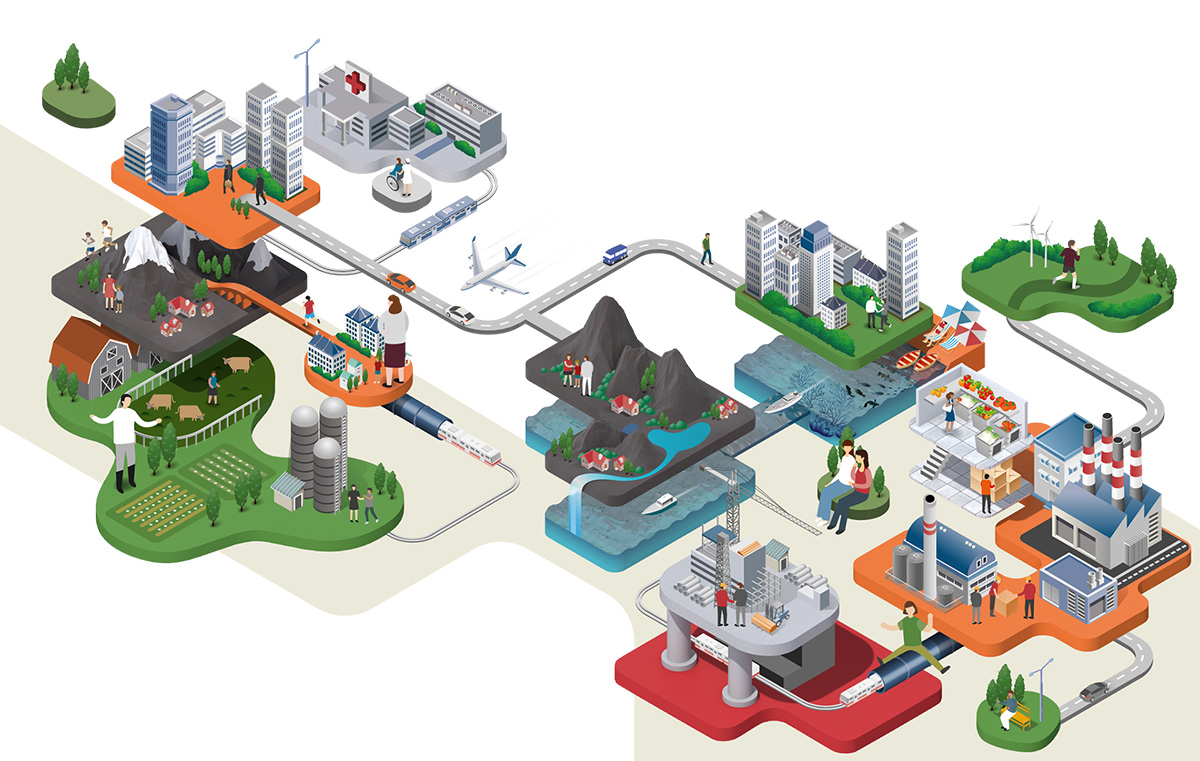
Exploded isometric drawings are useful for revealing parts of a production that might be subconscious or internal. They're used past architects, engineers and product designers the world over to improve explain the intricacies of a design. To create an exploded isometric, you need to know the detailed inner workings of any you are cartoon, so they're are usually used at the final pattern phase for presentations to clients.
Isometric cartoon examples
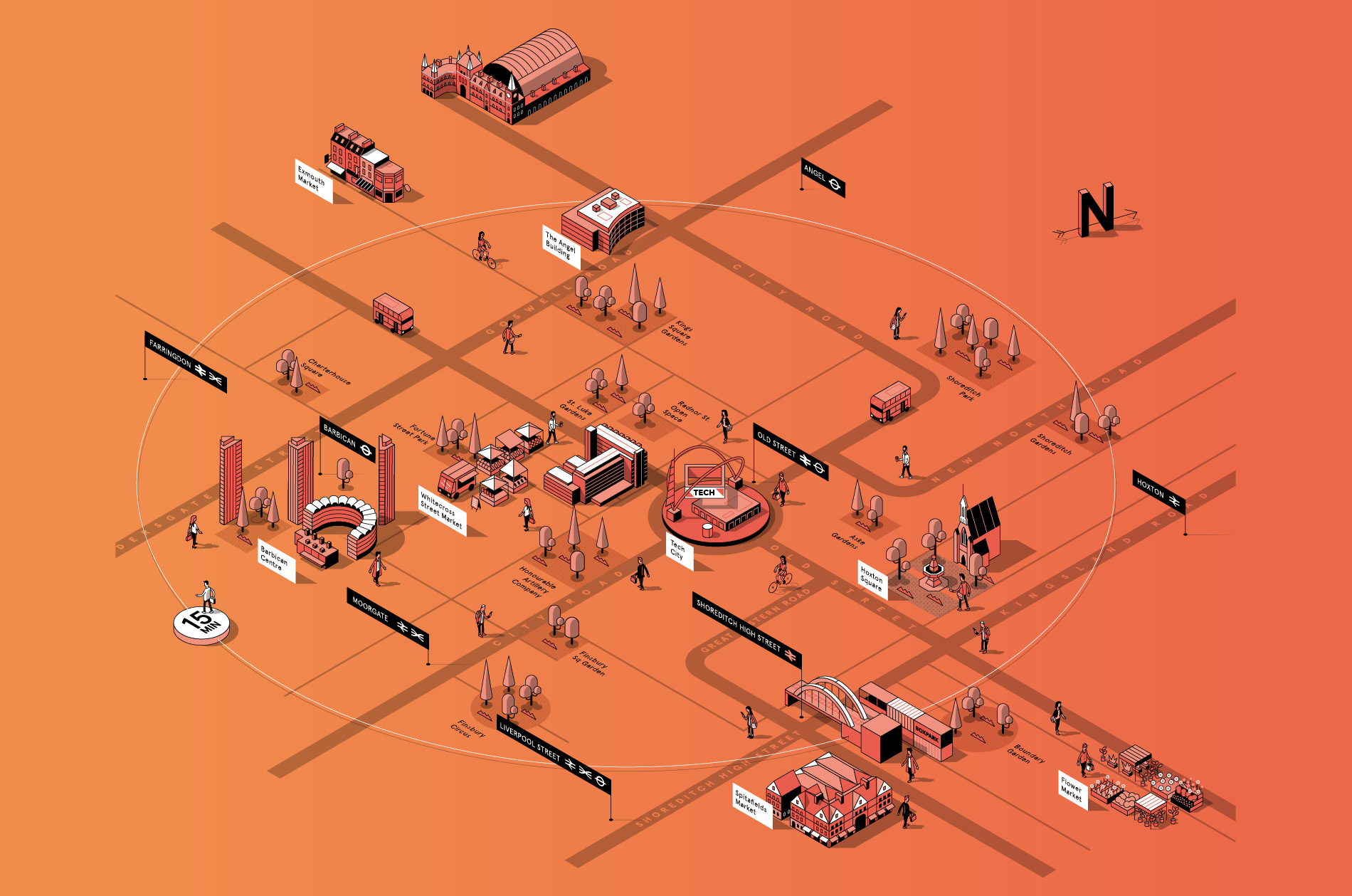
Illustrator and art director Mauco (opens in new tab) created this isometric map to stand for the areas surrounding the SPECTRUM edifice in London. It shows only the main roads and landmarks to help people orientate themselves.

Jing Zhang (opens in new tab) is an illustrator working mainly with clients in the advertizing industry. She's built a particular reputation for her detailed exploded isometric designs, including this creation for Slack. It's part of a series to accompany the brand'southward stories, focusing on elements such as a happy mobile workforce (above).
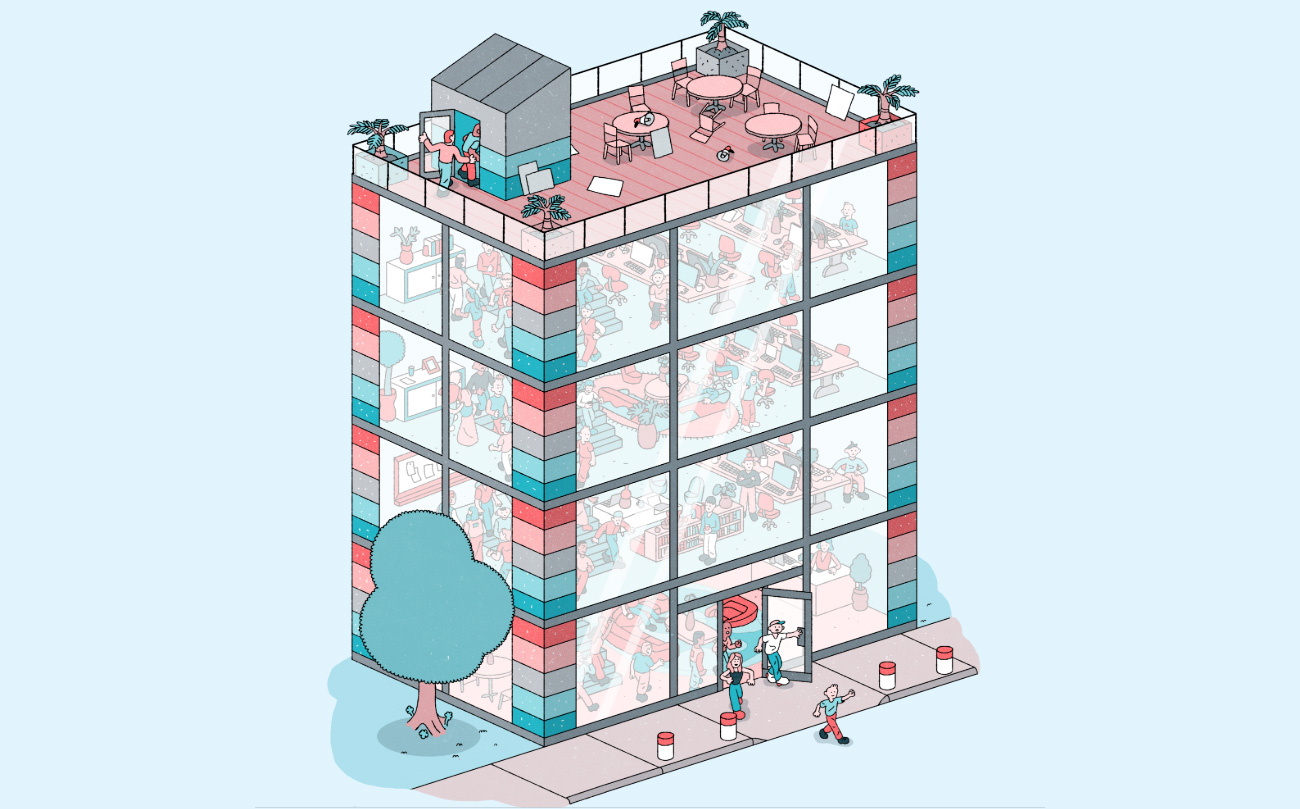
This design was created for an article in the The California Sunday Magazine, entitled The Tech Revolt and exploring political activism in the tech industry. In it, illustrator Tim Peacock (opens in new tab) uses isometric project every bit a way of revealing the inner workings of a Silicon Valley office block.
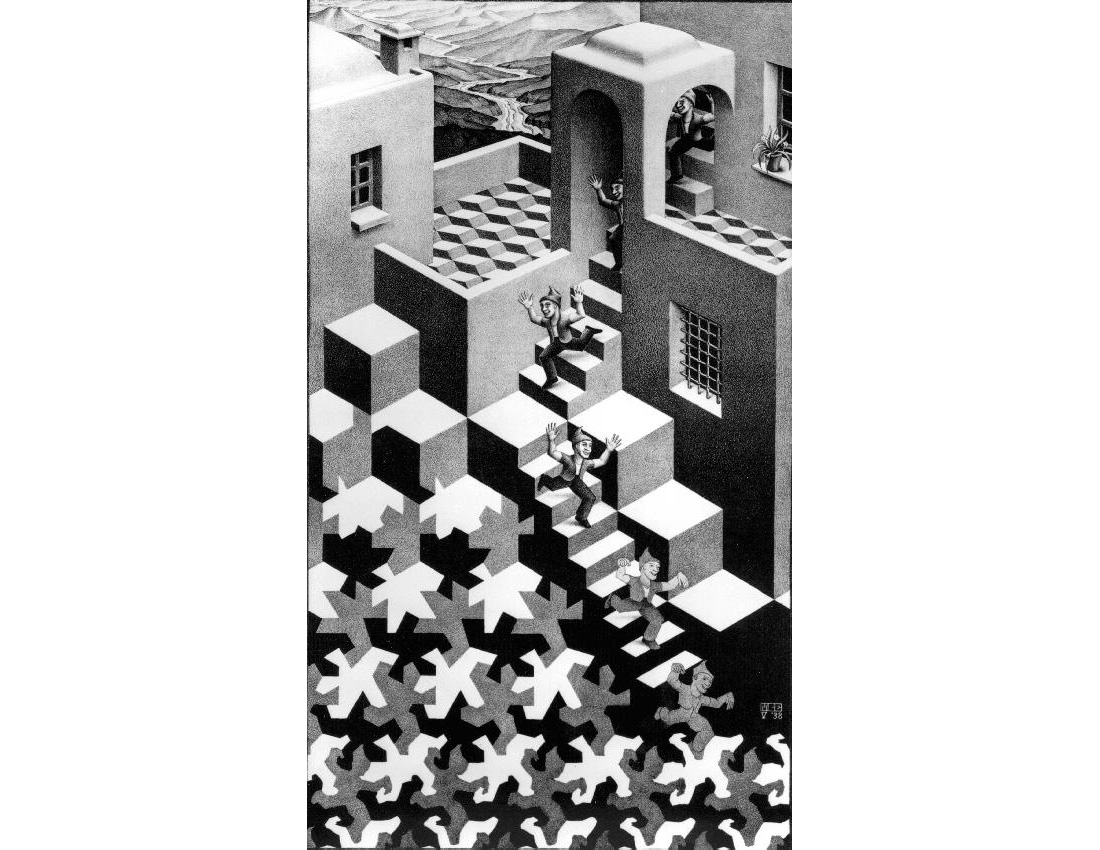
MC Escher was perhaps the male monarch of using isometric projections in his artworks. His utilize of parallel geometries to describe listen-angle staircases that go nowhere will be familiar to most. In Bicycle (1938), is it clear how isometric projection comes into his piece of work, from the pattern on the ground to the utilise of cubes that plow into steps.
Read more:
- Pencil drawing techniques: Pro tips to acuminate your skills
- Incredibly realistic pencil drawings
- Sketching tips: Hone your skills
Related manufactures
tylorhicaltisee38.blogspot.com
Source: https://www.creativebloq.com/features/isometric-drawing

Post a Comment for "Cool Things to Draw on Isometric Paper"